
|
|
|
![]() |
|
|
Thread Tools |
Rating:
|
|
|
#1 |
|
Tom
|
Dalian (Jinshitan) Birding Reports
I want to start putting my reports online here because I am the only birder in Dalian that I know of and will most likely be leaving in a year and a half. I have many written records from the last 4.5 years but am now realizing that it will be more helpful to future birders in the Dalian area if the information is online. I couldn't have picked a better time with migration just beginning. I will post reports of birds in the area and try to have some photos from the day as well. I will also record anything about the area that I think is related to birds. Again, the main reason for doing this is to leave a record for anyone who wants to know information about this area. The area I live (Jinshitan National Holiday Resort) is an excellent place to watch migration. I am near the end of the Liaodong Penninsula and right on the ocean. So far I have seen over 250 species in Jinshitan alone.
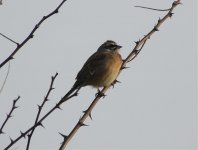
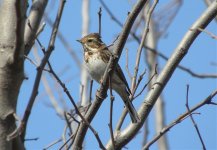
Last Saturday, Bai Qingquan from Dandong came to Dalian with a friend who is studying shorebirds. The main purpose of his trip was to try to relocate the Pallas's Gull found by Brian Jones (from Beijing) in Jinzhou Bay. We did find it and also a Little Gull. There were also Saunder's in breeding plumage. In another smaller bay near Kaifaqu we saw a Glaucous Gull. Ochre-rumped Bunting was another nice addition among the weeds around Jinzhou Bay. Ochre-rumped Bunting are locally common if you know where to look in Jinshitan. 45 species between Jinzhou Bay and Jinshitan that day. I have put together a small field guide to the Birds of Dalian that includes 183 species. It is also available in Chinese. The book is a picture guide with 3 colour photos of each species. It is a simple introduction to the birds around here to raise awareness. It is amazing how few people know of the birds that pass through here. Hopefully this book will inform a few. Tom |
|
|
|
|
#2 | |
|
Registered User
|
Great idea Tom - I think it will be useful, and we'll look forward to the news and pics.
Quote:
|
|
|
|
|
|
#3 | |
|
A taff living in Sichuan
|
Quote:
All the best Sid and Meggie
__________________
See our Sichuan birding website at - http://sichuanbirding.cloudaccess.net/and our Sichuan birding blog at - sichuanbirds.blogspot.com/ |
|
|
|
|
|
#4 |
|
Tom
|
Sid and Meggie,
The only mammoth task about putting it together was going out and documenting what I saw which is what I love to do anyway. It gave me an excuse over the last few years to get out and photograph birds. Writing a little description and status about each species wasn't that hard once I sat myself down and did it. Computer programs are very easy to use for something like this. There is a bit of interest around. More than I thought anyway. I was working with DERC (Dalian Environmental Resource Centre) on the book but now am just printing it myself. Gretchen, I was reading that some Pallas's Gulls winter at one river in Japan every year and I'm thinking the one here presently could be one of those who didn't get there. There are well over 1000 gulls that winter in Jinzhou Bay near a garbage dump site and it was mixed in with them. |
|
|
|
|
#5 |
|
Tom
|
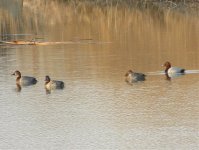
Report from March 16, 2010 (Jinshitan)
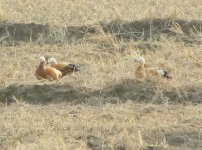
Common Pheasant Black-tailed Gull Meadow Bunting Ruddy Shelduck Vega Gull Pallas's Bunting Common Shelduck Eastern Marsh Harrier Mallard Upland Buzzard Spot-billed Duck Eurasian Kestrel Northern Pintail Grey Heron (FOS) Garganey Daurian Redstart Common Pochard Vinous-throated Parrotbill Common Merganser Yellow-throated Bunting |
|
|
|
|
#6 |
|
Mike Kilburn
|
Great stuff - very interested to see what you find. I've been interested in how the Dalian peninsula compares to Beidaihe for migration for a while.
Do you get crane passage in either spring or autumn? Pallas' Gull gull wander in winter and have a pretty big range - I've seen in most winters in HK and also at Dali in Yunnan. Cheers Mike Cheers Mike
__________________
Latest Patch: Dollarbird, Grey-streaked Flycatcher, Oriental Reed Warbler, Crested Serpent Eagle, Chinese Goshawk, Great Egret, Cattle Egret (82) Latest Hong Kong: Thick-billed Warbler, Naumann's Thrush (443) Latest Greater China: Père David's Tit, Chinese Fulvetta (955) |
|
|
|
|
#7 |
|
Tom
|
Habitat Loss Frustration
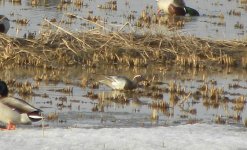
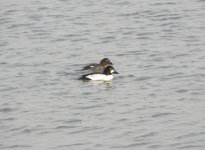
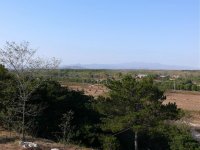
I just walked in the door from doing my favorite loop right near my house. The rice fields where the pics on my last report were from is now buried under 10 feet of dirt. The ducks are flying around above trying to figure out what to do. I didn't hang around long because just me on my motorbike riding around the outside of the field was scaring them all over the place. Ducks are so afraid of people here.
There is some history to my frustration with things like this. I have about 10 places that I check out 2-3 times a week. That was the last place to now be under threat if not destroyed completely. The worst example was a large area (probably 50 acres) of estuary and sea farming where a river met the ocean about 10 minutes from where I live. The wetlands there were used by Chinese Egrets who breed on the islands off the coast. In the first weeks of May it was possible to see 50-100 feeding there in one day as well as all the other egrets and shorebirds. Someone had the bright idea of taking down a mountain (I mean that in a very literal sense) and throwing it into the bay so that there is no bay there at all anymore. They literally filled in the entire bay and sea farming areas under about 4-5 meters of rock and fill. This started last winter and is still happening as we speak. I should really take a picture and post it here to show how large of an area I'm talking about. On the way home after being depressed about the rice fields, I turned into a small road that leads to a reservoir and great surrounding habitat. A guard stopped me to explain that I could no longer enter as the official land transfer took place this week to the new golf course people. This is a place that I called "my birding area" and new it very well. Tiger Shrike, Striated Heron, Chinese Pond Heron, Mandarin Ducks, Black-capped Kingfisher and others bred there each year. I new the day was coming soon. Last September they started with bulldozers and now about half of the area is completely filled in, including much of the reservoir. I saw Smew there today for the first time at that place after trying in vain to get in through another trail. It's just all very frustrating. I'm not anti-China. I love it here and have chosen this as a place to live and raise a family, but the development has no end in sight. Natural habitat has no value and must seem like useless land that needs something on it. There had better be some education about what natural habitat does for us (never mind wildlife) before it is too late. Bury it all under fill and there will be flood problems and polluted air. I'll attach the one picture I took today in the three hours I was out. Hope others had a better day! Tom |
|
|
|
|
#8 |
|
A taff living in Sichuan
|
I know how it feels - the rice fields just over from my apartment - where I've seen about 90 species - have also been completely destroyed this last couple of weeks - new building work!!!!!
Luckily Sichuan still has huge areas of map with hardly a trail - so its just a matter of making sure we spend as little time around Chengdu as possible. And hoping that the devastation will stop one day.
__________________
See our Sichuan birding website at - http://sichuanbirding.cloudaccess.net/and our Sichuan birding blog at - sichuanbirds.blogspot.com/ |
|
|
|
|
#9 |
|
Mike Kilburn
|
Tom
Its awful work, but the best thing you can do is document the habitat loss and the decline in the number of species you see. Its best if you have "before" and "after" data and pix so that people can see what's been lost. It sounds like you have lots of data from your 4.5 years here, and could serve as an invaluable benchmark for what the area can/did support. HKBWS is respected and effcetive in conservation in HK because we do have good data that no-one can argue with. The next stage is showing what you have observed to the right people. This is always a sensitive issue, but where nationally protected species like Chinese Egret are losing habitat at least you have the law on your side. You may find that the local environmental protection department/wildlife protection office welcomes support from other people who care.Is there a local/provincial bird club in Dalian? they may have contacts, as may WWF China or any academics doing work on the egrets. Its harder with unprotected species, but still worth documenting. Cheers Mike
__________________
Latest Patch: Dollarbird, Grey-streaked Flycatcher, Oriental Reed Warbler, Crested Serpent Eagle, Chinese Goshawk, Great Egret, Cattle Egret (82) Latest Hong Kong: Thick-billed Warbler, Naumann's Thrush (443) Latest Greater China: Père David's Tit, Chinese Fulvetta (955) Last edited by MKinHK : Monday 22nd March 2010 at 23:47. |
|
|
|
|
#10 |
|
A taff living in Sichuan
|
I totally agree with Mike - part of our work is to record what was there - these threads will hopefully become historic documents that will inspire future generations to try a put a few things back to how they should be.
I lived for 15 years in Denmark - the agricultural industry in that country, through drainage and industrial farming, totally devastated most of the bird rich habitat in that country. Apart from creating sterile monoculture agrodeserts - these changes also had horrible effects om other vital parts of the environment - leaching of nutrients and agricultural related waste from fields cause oxygen fall out and toxic algal blooms in Danish coastal waters and started to affect underground drinking water. I also witnessed two Danish extinctions while there - White Stork and Black Grouse These developments didn't please the Danes and certainly did nothing for their tourist industry. To attempt to partly combat these trends - and restore wildlife habit - the Danish Government started projects that included putting the bends and reed beds back into some of the rivers that had been straightened during the times of agricultural vandalism and reflooding some wetlands. I lived in the very center of the second biggest Danish city Aarhus - it was just a short bike ride to a city wetland where I could see Osprey and White-tailed Sea Eagle and hear the call of one of the returning birds - Corncrake. I don't think - anytime soon - the Chinese will following the Danish lead - but some day the need to change tack, to try and restore some sort of environmental levels that, ward of ecological disaster and allow for comfortable living, will surely be forced onto the government. Drinking water conservation immediately comes to mind - with the horrible effects that urban and industrial development has on drinking water here - any large scale projects could hopefully have a positive spin-off for bird-life - as re-establishing natural well vegetated river courses is one of the most effective ways to protect water quality and prevent flood. China is going through incredible change - its starting to go through another barrier soon, foreign companies are slowly moving out because labor has now become too expensive, and are relocating to places like Vietnam. In this modern China the more affluent with their cameras and lust for natural adventure are the perfect targets for our bird 'propaganda' - if we can't do anything else, then just putting pretty pictures up here will be a wake-up call to some folk - how natural China can and should be!!!!!!
__________________
See our Sichuan birding website at - http://sichuanbirding.cloudaccess.net/and our Sichuan birding blog at - sichuanbirds.blogspot.com/ Last edited by china guy : Tuesday 23rd March 2010 at 01:56. |
|
|
|
|
#11 |
|
Tom
|
I agree 100% with both of you and also have been thinking about the amount of change that is happening. It's sad to be on this end of the issue (documenting so people will know what was once there) and not on the restoring end. I can also site many examples of this from the west coast of Canada where I grew up. Things there have come full circle as people and governments now are begining to understand that nobody wins when the environment is not respected.
There is one environment society here in Dalian that I know about and have worked with. They, like many other such groups, are struggling with money this year. There was a bird watching society or club in Dalian but I`ve been told most of them moved abroad. Mark, I`ve never seen large groups of cranes migrating in the Dalian area. They could follow the other side of the penninsula but I think I would have heard something about it by now. There is a crane wintering site about 1.5 hours north of where I am that usually gets more than 100 each winter. I`m told there is a much larger wintering area near Shenyang (about 4 hours from here) where more cranes winter. More cranes follow the mainland coast as is recorded by people in Beidaihe but there are also more people birding there as well. There was one Oriental Stork seen here in Jinshitan coming into a reservoir area just before dark last Spring. Tom |
|
|
|
|
#12 |
|
Tom
|
Sorry, Mike, not Mark!
|
|
|
|
|
#13 |
|
Mark Andrews
Join Date: Mar 2008
Location: Leicester, UK
Posts: 6,193
|
LOL, similar!
Feel for all of you having to witness this relentless destruction of habitat on a daily/weekly basis. I see with trepidation, Gretchen reports more work being done in Beidaihe on the other thread. The speed of change in the last five years is to be honest, beyond comprehension at times. I had a meeting recently with officials from the local government about proposals for the Beidaihe vicinity, If things don't slow down/revert/change, there won't be any cranes passing along the coast in the future due to a complete lack of staging posts.
__________________
DigiPics & Artwork - http://www.smandrews.com Digivideos - http://www.youtube.com/user/rockfowlmarkandrews Support the Oriental Bird Club |
|
|
|
|
#14 |
|
Tom
|
March 21 + 23, 2010
Had time after work to head out to Xiao yao wan (the Chinese Egret feeding site that is now buried). There is a new tide line now where it's possible to get close to deep water. Saw the following there and also Sunday on a drive:
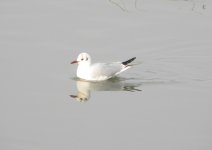
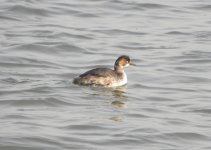
Common Pheasant Ruddy Shelduck Mallard Spot-billed Duck Northern Pintail Falcated Duck Gadwall Garganey Smew Common Goldeneye Common Merganser Red-breasted Meganser Oriental Turtle Dove Dunlin (they looked a little confused at the disappearance of the mudflats) Black-tailed Gull Black-headed Gull Hen Harrier Eurasian Kestrel Great-crested Grebe Black-necked Grebe Naumann's Thrush Great Tit White Wagtail Yellow-throated Bunting Meadow Bunting Pallas's Bunting |
|
|
|
|
#15 |
|
Tom
|
Mike,
3 Cranes over Jinshitan Friday morning that looked like they were coming in to land near the reservoir that I can't get in to anymore because of golf course construction. I saw them on the way to work in the air and didn't get a chance to have a look this weekend b/c I was in Shenyang. This, just after I told you they don't pass by here! Tom |
|
|
|
|
#16 |
|
Mike Kilburn
|
I guess like all migrants they don't necessarily follow fixed routes - hence our one record of Siberian Crane and one record of Common Crane in HK.
Which species was it? Cheers Mike
__________________
Latest Patch: Dollarbird, Grey-streaked Flycatcher, Oriental Reed Warbler, Crested Serpent Eagle, Chinese Goshawk, Great Egret, Cattle Egret (82) Latest Hong Kong: Thick-billed Warbler, Naumann's Thrush (443) Latest Greater China: Père David's Tit, Chinese Fulvetta (955) |
|
|
|
|
#17 |
|
Tom
|
First week of April report
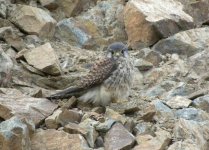
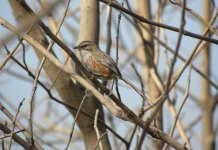
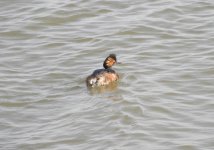
I have been out a few times in the last week. No big birding days but a few hours here and there. The weather is still very cold for this time of year but some migrants are beginning to arrive. I saw my first of the season Barn Swallow yesterday flying around over a marsh. I have no idea what it is going to eat, I haven't seen an insect yet this year. Here are some photos and a list from the last week.
Common Pheasant Common Shelduck Spot-billed Duck Mallard Gadwall Falcated Duck Common Goldeneye Common Hoopoe Little Owl Oriental Turtle Dove Dunlin Little-ringed Plover Kentish Plover Black-tailed Gull Vega Gull Black-headed Gull Eurasian Kestrel Black-necked Grebe Naumann's Thrush Daurian Redstart Crested Myna (first time I've seen them in Dalian. Could be released? There were 6 of them and they looked very much at home in the wild) Great Tit Barn Swallow Chinese Bulbul Chinese Hill Warbler Vinous-throated Parrotbills White Wagtail Oriental Greenfinch Meadow Bunting Rustic Bunting Yellow-throated Bunting |
|
|
|
|
#18 |
|
Mark Andrews
Join Date: Mar 2008
Location: Leicester, UK
Posts: 6,193
|
Great Hill Warbler pic, been trying for years to get one as sharp as that!
__________________
DigiPics & Artwork - http://www.smandrews.com Digivideos - http://www.youtube.com/user/rockfowlmarkandrews Support the Oriental Bird Club |
|
|
|
|
#19 |
|
Registered User
|
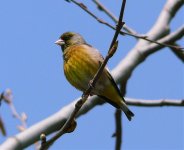
Nice to see what you've had around! Lots of familiar names - though several I would like to have seen (like little owl! and oriental greenfinch which is still only a rumor to me).
I've caught a glimpse of a swallow or two, but no good looks. Speaking of insects though... last week we found a mosquito in the house! This despite the fact the heat has been off for two weeks and our indoor temps hover around 67! Those insects are more ubiquitous and tougher than I usually think! Anyway, great to see your update and pics. |
|
|
|
|
#20 |
|
Registered User
Join Date: Dec 2004
Location: North Norfolk
Posts: 1,619
|
Oriental Greenfinch at Beidaihe
Hi Gretchen.
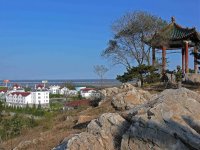
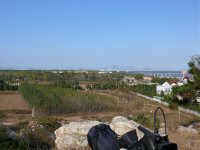
I saw several of these near the featured pagoda, south of the plain and close to the coast road. We (can you recognise the other birder?) were hoping for cranes. The Greenfinches were usually on wires, around the crop fields, at the bottom of the small hill on which the pagoda is situated. This was in October 2006. Actually, the bird photo is from April 2007- so you should have a good chance if you go soon. Last edited by firstreesjohn : Thursday 8th April 2010 at 07:49. Reason: correction |
|
|
|
|
#21 |
|
Tom
|
Report from April 8, 2010
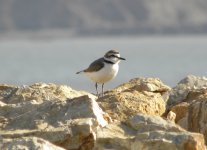
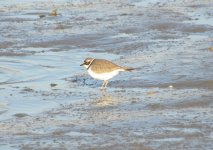
Went out for an hour today after work to where a medium sized river meets the ocean. First of season Black-winged Stilts, Kentish Plovers, Little-ringed Plovers, Dunlin, a Great-crested Grebe, many Goldeneye, Mergansers, and many gulls including a strange one that I'm posting to the ID forum. I thought it was a Glaucous until I looked closer at the picture. Forgive me for posting so many Kentish Plover shots but I really like how they look in breeding. Gotta love shorebirds during their spring migration!
Tom |
|
|
|
|
#22 |
|
Registered User
Join Date: Mar 2009
Location: Beijing
Posts: 514
|
Hi Dongbei,
Kentish Plovers deserve all the attention they get. I, also, never get tired of photographing them. Cheers Shi Jin |
|
|
|
|
#23 |
|
Registered User
|
John, thanks for the greenfinch and other pics. I've actually never been up to that pagoda, but I have met the other birder
Thanks for the tip on where you saw the greenfinches (and I'll look more at the birds on the wires!).Dong Bei, hope you're having a nice clear day like us today, and that you have a little time to enjoy the outdoors as well. I've been bad at posting, but I can definitely see (the expected pattern) that you're getting the birds that have come through here. That's fun. |
|
|
|
|
#24 |
|
Tom
|
Jinshitan Report April 10, 2010
Took a few hours drive on my motorbike Saturday.
Common Pheasant Ruddy Shelduck Common Shelduck Gadwall Falcated Duck Mallard Spot-billed Eurasian Teal Common Goldeneye Red-breasted Merganser Little Grebe (FOS) Great-crested Grebe Grey Heron Eurasian Kestrel Little-ringed Plover Black-tailed Gull Black-headed Gull Common Gull Vega Gull Common Kingfisher (FOS) Great Tit Barn Swallow Chinese Bulbul Vinous-throated Parrotbill Dusky Thrush (FOS) They didn't winter here this year. Red-flanked Bluetail (FOS) Daurian Redstart Siberian Stonechat (FOS) White Wagtail Brambling (they also didn't winter here this year) Greenfinch Meadow Bunting Reed Bunting Pallas's Bunting |
|
|
|
|
#25 |
|
Tom
|
Shorebirding April 17+18
I had 5 visitors over the weekend -- 4 Russians and and 1 German currently living in Alaska. All were very experienced birders who work in ornithology. Together we went to Pikou and Jinzhou Bay with shorebirds as the main focus. We did ok despite horrible weather (fog and mist). Sometimes you couldn't see more than 50 feet ahead. Here is the list and photos.
Pheasant Ruddy Shelduck Common Shelduck Mallard Spot-billed Duck Northern Shoveler Falcated Duck Garganey Eurasian Teal Common Goldeneye Red-breasted Meganser Common Kingfisher Common Hoopoe Eurasian Curlew Far-eastern Curlew (over 100) Whimbrel Bar-tailed Godwit (over 500) Spotted Redshank Common Redshank Marsh Sandpiper Common Greenshank Green Sandpiper Terek Sandpiper Common Sandpiper Great Knot Red Knot (5 over 2 days) Dunlin Red-necked Stint Grey Plover Little-ringed Plover Kentish Plover Lesser Sand Plover Black-tailed Gull Mew Gull Vega Gull Black-headed Gull Saunders's Gull Upland Buzzard Eurasian Kestrel Peregrine Falcon Little grebe Chinese Egret (FOS) Little Egret Intermediate Egret (not common here at all) Grey Heron Dusky Thrush Red-flanked Bluetail Siberian Stonechat White-cheeked Starling Barn Swallow White Wagtail Grey Wagtail Richard's Pipt Olive-backed Pipit Buff-bellied Pipit Greenfinch Brambling |
|
|
| Advertisement |
![]() |
| Thread Tools | |
| Rate This Thread | |
|
|
Similar Threads
|
||||
| Thread | Thread Starter | Forum | Replies | Last Post |
| Essex Bird Reports and Essex Birding - free to a good home | Brian Egan | Essex | 0 | Friday 11th December 2009 11:40 |
| more from Dalian, China | Dong Bei | Bird Identification Q&A | 1 | Sunday 27th September 2009 14:45 |
| Dalian Birding | dbeek | China (including Hong Kong & Macau) | 56 | Saturday 4th July 2009 07:22 |
| Jinshitan, China shorebird ID | dbeek | Bird Identification Q&A | 2 | Saturday 9th May 2009 11:16 |
| Hello from Dalian, China! | dbeek | Say Hello | 5 | Friday 27th March 2009 14:52 |